Legal AI companies are resorting to ‘brutal’ low-ball tactics in order to win customers as the battle for market share becomes increasingly intense, Artificial Lawyer has learned, with heavily VC-backed startups the most frequently doing this.
In the last few days, three different legal tech companies have told this site of how they experienced extreme low-balling from rivals, with prices on offer first halved, then cut to a fraction, and in two cases even dropped to $0, in order to win the customer in a pitch, or pry them away from their current provider.
In all three cases the vendors carrying out the ultra-low-ball strategy were companies that had received large infusions of VC cash – way more than the companies they were competing against, which were not always small, but just didn’t have those kind of resources to squander.
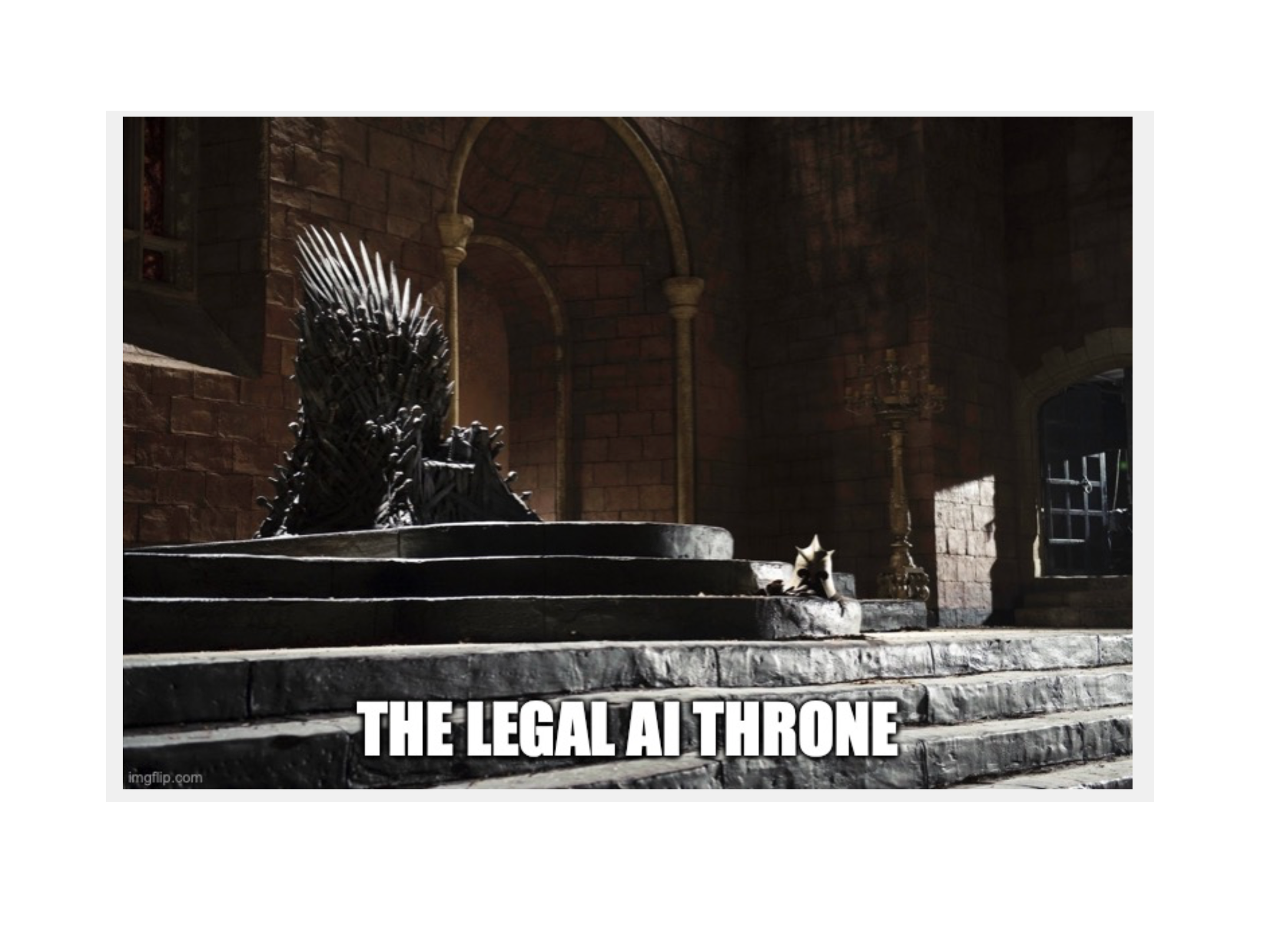
In short, companies with money to burn are subsidising their customer acquisition with rates that are so low it ‘crowds out’ rivals and makes it very hard for those not playing this new legal AI ‘Game of Thrones’ to compete.
Does It Matter?
Competitive bidding has existed ever since someone had the bright idea of trading goods. So, isn’t this what happens all over the world and in every market?
Well, yes and no. AL has been writing about legal tech since 2016, and never in all that time have three different vendors provided stories like this all in the space of a few days. No doubt legal tech companies have low-balled each other for years, but right now it does indeed seem to be especially intense.
AL’s guess is that it boils down to the very high volumes of VC money we are seeing now going into legal AI companies, and the inevitable pressure that then causes the recipient to get deals done in order to drive growth. (Of course, we maybe should not blame the VCs for all of this, founders of startups get a say in their business strategy as well.)
One question that struck AL is this: if the deals make little or no money for the low-baller, then how does this help the winning vendor? Aren’t the new wave of legal AI startups totally focused on gaining revenue? What is the point in growth without revenue?
The answer has to be that it’s all about ‘crowding out’, i.e. this is a strategy based on looking at a market segment, understanding who the main competitors are there, and then trying one’s best to make sure they don’t increase their market share.
In this case, this is being done not just with super-motivated sales folks, but with offers that are too good to say no to. That then locks out rivals and gives the winner time to develop a relationship with the customer, and hopefully then to move to a more financially ‘normal’ price later on once new terms are up for negotiation.
But, what happens to the companies that cannot subsidize low-ball prices? The short answer is that they either have to win on product merit alone, or get squeezed out of the market. At best they can hold onto the loyal customers they have and hope that in the future some disillusioned low-balled businesses eventually come back to them.
Either way, those with the financial resources, i.e. tons of VC cash, for example, to low-ball in all directions ‘crowd out’ anyone else who cannot, or will not, play this game.
Is This ‘Bad Business’ or Simply ‘Just Business’?
As they say, all is fair in love and war – and truly there is a war on now for market share across multiple legal tech verticals where a new batch of legal AI players are active.
And, as Bronn points out in Game of Thrones, (to paraphrase) ‘every great house was started by a killer’. I.e. you don’t get to build great legacies by being nice to one’s sworn rivals in the heat of the battle.

And you should read the history of how IBM became a household name back in the day, if you want an example of a tech company operating with a brutal pragmatism that many decades later led to a group of AI pioneers building Deep Blue.
At the same time, sustained low-balling is only possible if you have the funds to do this. That puts those with less VC cash at a disadvantage. It skews the market to those who can afford to skew it, and especially those who have opted for a specific type of growth strategy.
AL is no expert in competition law, so any thoughts here are purely on a human and empathetic level. This site can see the logic for such behaviour. If your investors have given you many millions and want to see rapid growth, or at least a rapid expansion of market presence, then you are in a tough spot. Look at what happened to Robin AI when their revenues didn’t please the investors and a new funding round was scuppered….now that truly was brutal. No-one wants to be in that situation.
Likewise, if you are a tech company founder with a great project, but limited funds, it must be painful to realise you’re losing deals simply due to the economic might of your rivals, which then leads to a sustained loss of revenue, which then could in time kill the company…..all because you could not raise enough – or perhaps did not want to be heavily VC-backed. In turn, that could see good companies exit the market, or not achieve what they may have been able to.
But, we can go in circles here. The pragmatist then will argue: ‘Well, your company should have raised more.’ To which the annoyed tech founder replies: ‘But, I didn’t want to be owned by VCs. I’d rather bootstrap!’ To which the pragmatist replies: ‘Well, that’s your own choice.’ And the founder fires back finally: ‘If that’s how you all want to play, then this game it is not worth playing.’
And to conclude the GoT theme, Cersei Lannister stated: ‘When you play the Game of Thrones, you win or you die. There is no middle ground.’ Cersei would no doubt side with the low-ballers on this one…! (And AL is guessing Jon Snow would not approve.)
Other Considerations
- It does make you wonder what happens with the sales teams who expect big commission payments. How do you earn commission when the deal you have won had almost no monetary value? Do the low-balling companies give a special bonus for just winning a client? I.e. they use their funds to subsidize the low-ball offer and to also subsidize commission payments to the sales team?
- Will these ‘brutal conditions’ hasten the consolidation of the legal tech market many still expect to happen one day? I.e. those who cannot compete in this new market environment leave or get bought?
- Is the rise of Vibe Coding and the Anthropic suite of tools also adding to this? I.e. customers can use the DIY approach as leverage: ‘Well, we could buy your product, but my head of innovation just said they can build most of what you offer with Claude…..’ And that encourages the vendors to drop their prices?
A final thought is this: all of this fierce competition will presumably mean that – at least in the short term – customers will get much lower prices for legal AI tools. Customers will likely say this is a good thing.
Also, nothing is stopping them from going with whichever offer they see, even ones that are a lot higher. Law firms and legal teams have no obligation to go with the cheapest deal. They have a free choice here.
Plus, if those customers who get amazing deals then find they don’t get the service they expect, they will jump ship as soon as they can. So, from the buyers’ perspective one could say this brutal game of ‘Legal AI Thrones’ is in their favour.
Conclusion
The rights and wrongs of all this can be argued for many years to come. The short-term reality is that a handful of companies are seeking to remake the legal tech market in their image and are prepared to subsidize market share growth – to quite an extreme level – to achieve their goals.
–
If you’ve also experienced this, let AL know – in confidence, naturally.
Discover more from Artificial Lawyer
Subscribe to get the latest posts sent to your email.