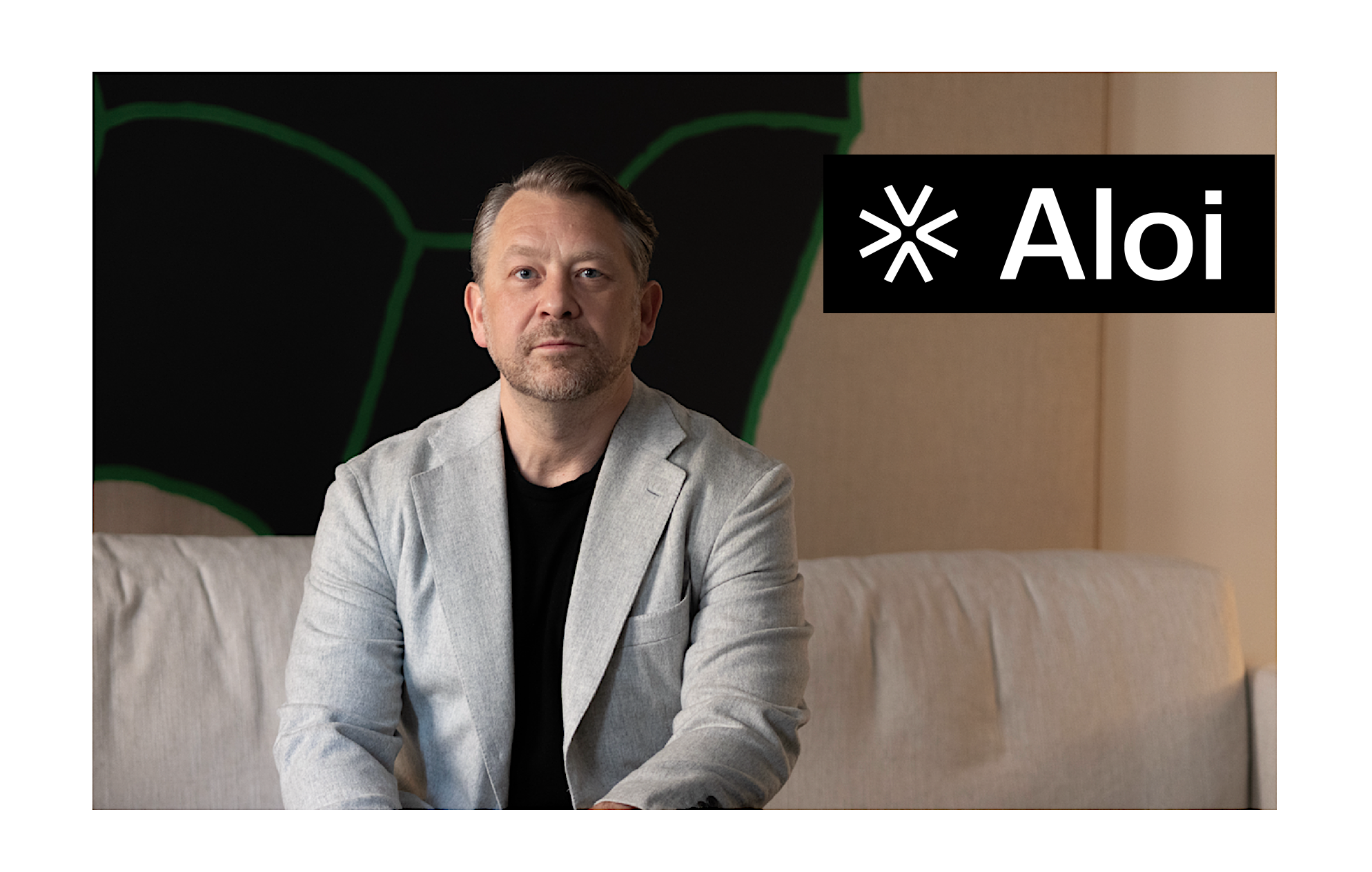
Aloi has raised $7m in early funding to develop what it calls ‘organisational judgment’, in order to improve legal AI outcomes. (See in-depth AL interview with CEO Johan Häger, below.)
At the core of the platform is Aloi’s Judgment Graph, which captures not only legal content but ‘the reasoning behind previous decisions, including how similar risks have been assessed, negotiated and mitigated’.
‘This enables lawyers to retrieve organisational judgment, rather than simply retrieving documents,’ the company explained.
The Sweden-based company added that its system is designed to integrate into firms’ existing technology stacks, and can be accessed through APIs and the Model Context Protocol (MCP), ‘enabling organisations to bring decision intelligence into the AI assistants and workflows they already use’.
At present they’re working with several Nordic firms, including Roschier, Avance and Wiersholm, alongside a growing number of international law firms. The company currently operates across the Nordics, Germany, the Netherlands, the UK, Spain and Portugal, with the United States representing its next priority market. The new funding will support continued investment in both engineering and commercial teams as Aloi expands internationally.
And as to the Seed investment, the main investor has not been made public, and it follows an earlier round of around $3.5m in 2025. They added they are planning for a Series A later in 2026.
Some of the investors they can mention include: Victor Jacobsson (co-founder of Klarna), Fredrik Jung Abbou (co-founder of Kry), Erik Engellau (founder of Launcher), and Fredrik Hjelm (founder of Voi).
And now the AL Interview with CEO and co-founder, Johan Häger.

Why did you start Aloi?
When I was in private practice, I saw a missing piece in how law firms used their proprietary data. Firms have accumulated enormous knowledge across matters, negotiations, clauses, disputes and outcomes, but that experience is often difficult to access and apply when lawyers advise clients.
I wanted to move legal advice away from being overly dependent on individual experience and towards a more evidence-based approach, where a firm’s collective knowledge can support legal judgement. What we have built is much more than a clause or precedent finder. Aloi identifies patterns in previous decisions and outcomes, helping firms manage risk and make better-informed legal judgments.
What does this funding mean to you on a personal level?
It is an important validation of what we are building. Our customers and investors recognise both the value of the product and the fact that we are approaching the problem differently.
We want to make a meaningful contribution to the legal market by giving lawyers more than access to clauses and precedents. Aloi turns a firm’s proprietary knowledge into decision intelligence – helping lawyers understand how similar situations have been approached, identify and mitigate risk, and make better-supported decisions.
What are you trying to fix in the legal world?
The industry is facing significant challenges and opportunities, many of which are being accelerated by AI. Much of the current conversation focuses on efficiency: completing existing legal processes faster and at a lower cost. That is important, but it is only part of the opportunity.
Aloi is about adding value through better retrieval and application of knowledge – not simply making processes more efficient. By making a firm’s accumulated experience accessible and showing the decision patterns within it, Aloi enables legal decisions and judgments to be better analysed and supported. Ultimately, that should improve not only how lawyers work, but also the experience and outcomes delivered to their clients.
What is your view of the impact of token costs?
As the AI market matures and current infrastructure subsidies potentially decline, the cost of using large language models could increase. Legal technology companies therefore need to be thoughtful about when and how they use LLMs.
The largest model is not necessary for every task. There is a significant opportunity to use smaller, specialised models for clearly defined tasks while reserving larger models for the areas where they add the most value. Platforms built with that flexibility will be better positioned as the economics of AI evolve.
Where would you like Aloi to be in the short to medium term?
In the short term, we want to demonstrate Aloi’s value at scale with leading law firms and continue strengthening our retrieval precision.
In the medium term, our ambition is for Aloi to lead the category in legal decision intelligence. We want to become the intelligence layer that enables firms to retrieve and apply their proprietary knowledge, not simply to find clauses or precedents, but to identify decision patterns, manage risk and support better legal judgment. That should translate into better advice from lawyers and, ultimately, better outcomes for their clients.
Thanks, and good luck!
–
More about Aloi here.
—
Two Major Legal Innovators Conferences this November
Come and join us in New York and London this November at Legal Innovators!
Legal Innovators UK – London, Nov 4 and 5

And, then Legal Innovators New York – Nov 17 and 18.

After another fantastic Legal Innovators California, where we had speakers from OpenAI, Y Combinator, Google, Meta, and many more pioneering organisations; and our stellar inaugural event in Paris this June, we are now looking forward to the landmark conferences in London and New York, both in November, and both across two days: Law Firm Day, and Inhouse Day.
Discover more from Artificial Lawyer
Subscribe to get the latest posts sent to your email.