By Robb Hern, General Manager, Corporate Legal, LexisNexis.
With businesses moving incredibly fast in the age of AI, many questions landing on in-house legal desks call for a rapid turnaround. Product wants a decision this week. Sales wants approval before the month closes. Most of those requests have a legal answer you can research and defend. But that’s not the end of your work.
Be sure of legal implications, but don’t stop there
A response can describe the law correctly and still be wrong for the company. It can miss a promise the company made to customers, a priority the CEO set in January or a fact sitting in internal documents. Sound legal analysis turns into useful in-house advice when it’s built on the company’s priorities. Here’s a hypothetical scenario.
A product leader sends Legal a short note: Can we use customer support transcripts to train the AI assistant we’re launching next quarter?
The first-pass analysis turns on which laws apply, what the transcripts contain and what customers were told. Considerations could include the purpose disclosed at data collection, as well as necessity of the data use and proportionality principles. A product-improvement disclosure and properly de-identified data may be helpful. Some laws also require specific consent.
Nobody could fault you for grounding your memo to the product team in current legal insight. But that perspective alone could steer the company where it doesn’t want to go.
Understand what the business is trying to do
Strategic in-house lawyers ask a second question before answering the first: What are you trying to accomplish?
The product leader doesn’t want training data for its own sake. The goal is to launch an assistant that resolves support tickets faster so customers stay and renew. Training on transcripts is one way to get there. Grounding the assistant in help-center articles might be another, with far less customer data in play.
Apply facts that live inside the company
I often say corporations are like organisms. Each one has its own size, needs, priorities and risk profile, so the same legal rule can live differently in each business. Some facts that matter won’t turn up in any statute. They’re in the company. Here are a few examples from our fictitious scenario.
- Contract commitments. Twelve of the company’s largest enterprise customers negotiated clauses barring use of their data for model training. Those clauses control, regardless of what the privacy notice allows.
- Public promises. The company’s published AI principles say customer data won’t train models without permission, and sales teams have repeated that statement in proposals for 18 months.
- Commercial timing. The biggest of those 12 customers is in renewal talks right now.
- History. Two years ago, a smaller data-sharing change that internal teams saw as innocuous drew customer complaints. The board still remembers it.
A use of customer data that privacy law permits could actually breach contracts, contradict public statements and threaten a key renewal. The legal findings have not changed, but the recommendation has moved a long way.
Give the business options to act on
A simple yes or no would fail the product leader here. A yes ignores the contracts. A no ignores a legitimate business goal and leaves the team to find a workaround.
Useful advice lays out options and explains the tradeoffs in business terms:
- Launch on time with a narrower data set. Exclude customers whose contracts have “no training” clauses, de-identify the rest and give advance notice of an updated privacy policy. Risk drops, but the assistant starts a little weaker.
- Ground the assistant without training it. Use help-center content and approved ticket summaries in place of raw transcripts. The launch date holds, and so do the published AI principles.
- Build an opt-in program. Invite enterprise customers to contribute data in exchange for early access. It’s slower, and it turns a privacy question into a stronger customer relationship.
Then help your requester make a good call. They could go with option 2 for launch with option 3 in parallel. The business gets its faster support assistant without putting a renewal or public promise at risk.
Put the law and the company in your best advice
The facts that reshaped this recommendation were scattered across a contract repository, a policy page, and internal communications from two years ago. Pulling them together takes time most in-house teams don’t have.
AI can help with that if it’s the right kind. General-purpose AI may come to mind, but it’s not designed for legal work. And really, not all AI answers are worth having.
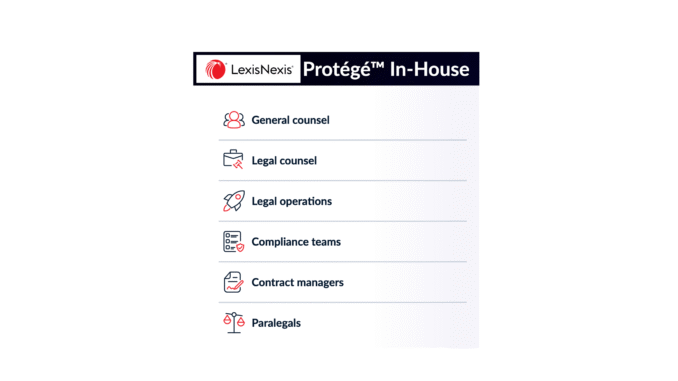
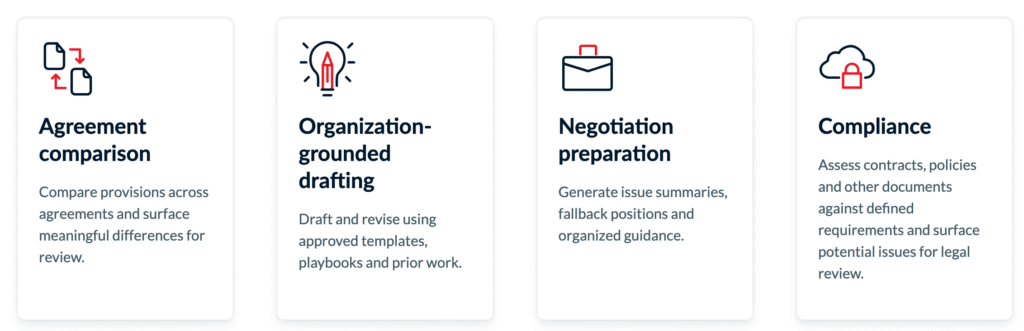
To provide the best guidance, you can combine authoritative legal content with your organization’s documents, playbooks and standards. Creating this unique value is one of many reasons we built the Protégé™ In-House experience from LexisNexis.
Your team can upload contracts, policies and prior work to a secure Vault, or connect approved sources such as your company’s document management system. In our example, the 12 no-training clauses, the published AI principles and internal communication would sit in the same workspace as the privacy law and related guidance. Your analysis draws on the law and your company documents with sources a lawyer can check. The first draft starts much closer to guidance your business can use. You still review it and own the professional judgment, the same way you’d review a newer team member’s work.
Make a meaningful legal and business impact
When you understand the objective, surface the company’s facts and hand the business options it can act on, you’re likely to be brought into decisions earlier, and your advice can have more impact.
Being right about the law is where the work starts. Being right for the company is where it pays off.
To find more information about how Protégé™ In-House can help you, please see here.

—
[ This is a sponsored thought leadership article for Artificial Lawyer by LexisNexis. ]
Discover more from Artificial Lawyer
Subscribe to get the latest posts sent to your email.