New legal AI startup, Walton, has launched what it’s calling an autonomous transaction system, which taps a firm’s past work – along with some human assistance – to create a specially customized ‘execution graph’ that then sequences future work for similar matters.
To make this happen, the US company explained that ‘our legal engineers work with your attorneys to capture how your firm handles each transaction type, then they build a system that drafts, negotiates, and closes the way you do’.
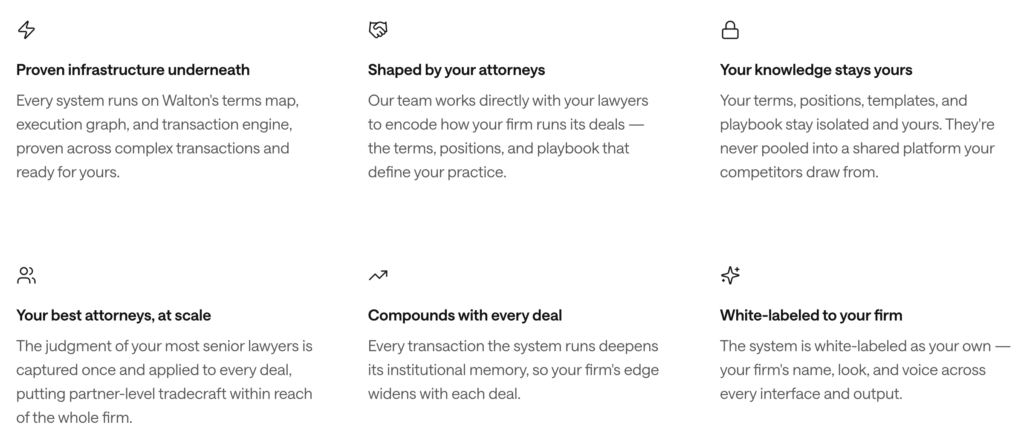
They underlined that ‘Walton is designed to assist attorneys, not replace them. It automates the operational side of running a transaction – drafting documents, keeping deal terms consistent, and making sure deliverables stay in sync. Attorneys remain responsible for legal strategy, negotiation, and final review, and can review, edit, or override anything Walton produces’.
One could see this as in the same ballpark as what some legal AI digital twin projects are doing, as well as judgment layer startups, which are tapping past work product to see how deals were negotiated.
Jake Sendar, co-founder of Walton, commented: ‘At the level of complexity involved in corporate transactions, getting most of the way there isn’t enough.’
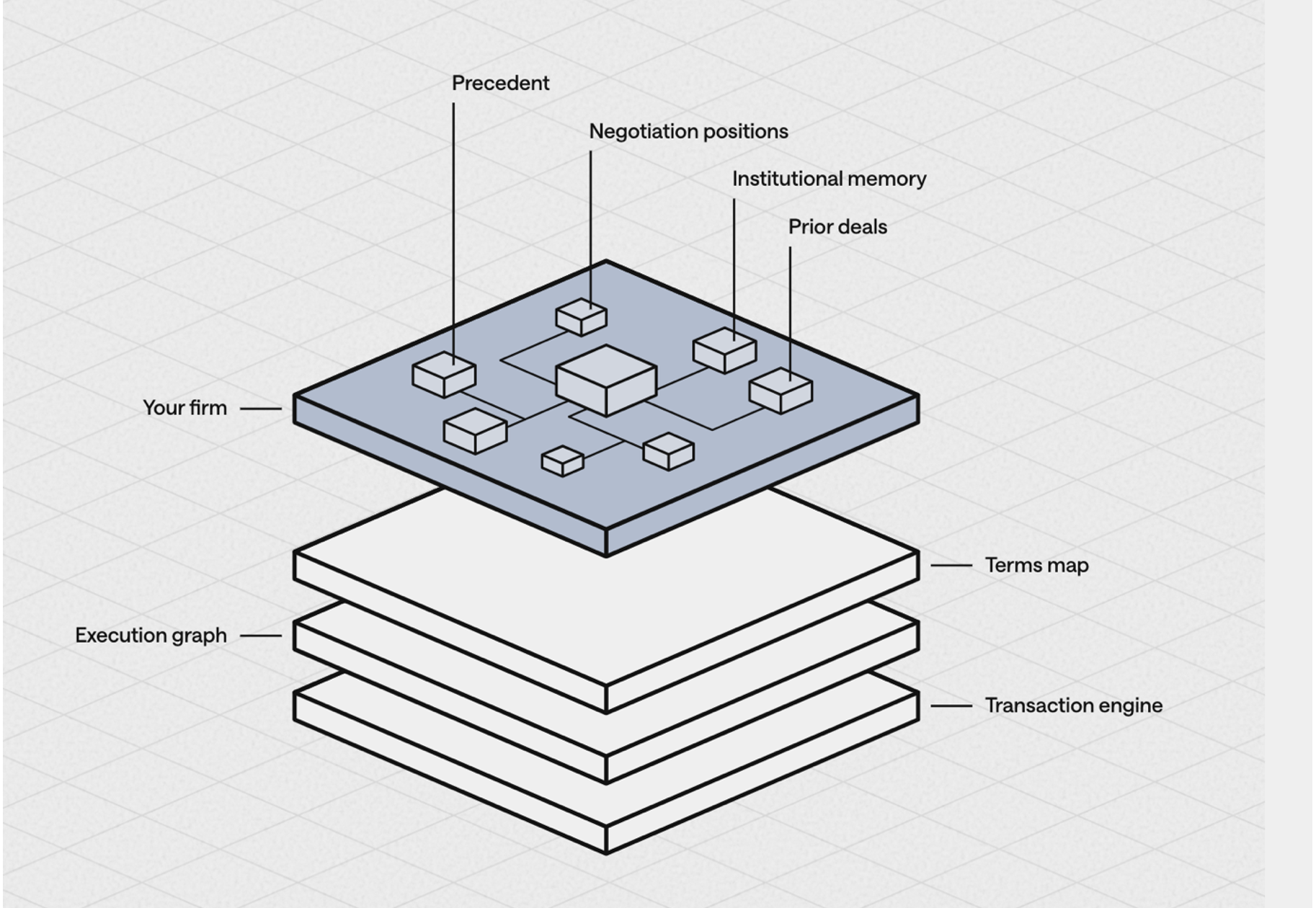
He explained that every Walton transaction system thus has four layers:
- ‘At the top is your firm’s precedent, positions, and judgment, captured by our team working directly with your attorneys.
- Beneath it, a terms map holds the state of the deal,
- An execution graph sequences the work,
- And a transaction engine generates the outputs.’
The company continued that they ‘source your precedent and forms, and embed with your deal teams for deeper builds. We process those materials into a terms map, master templates, and playbooks, then deploy them onto our transaction infrastructure as one connected system. We evaluate it against real deal scenarios until your attorneys approve. The result is a system you own, isolated to your firm and never shared with competitors.’
Co-founder Sendar is a former software engineer and was once a corporate lawyer at Pillsbury Winthrop Shaw Pittman. Meanwhile, fellow co-founder Michael Dansey previously worked at Paul Hastings and Gunderson Dettmer. Walton is currently backed by Afore Capital.
Plus, they also help with the new transactions in terms of supporting ‘negotiation and drafting, to diligence, to task management, and signature tracking, so you can close faster and more efficiently’.
In short, they marry up past work with present work.
Is this a big deal?
This approach makes total sense. Law firms have the data, the past deals, the templates and legal knowledge. Walton helps to crystalise this, which produces major efficiency gains.
Of course, the challenge for some law firms is becoming that incredibly efficient, especially if they are billing on the hour. But, many others may embrace this approach, regardless of billing method.
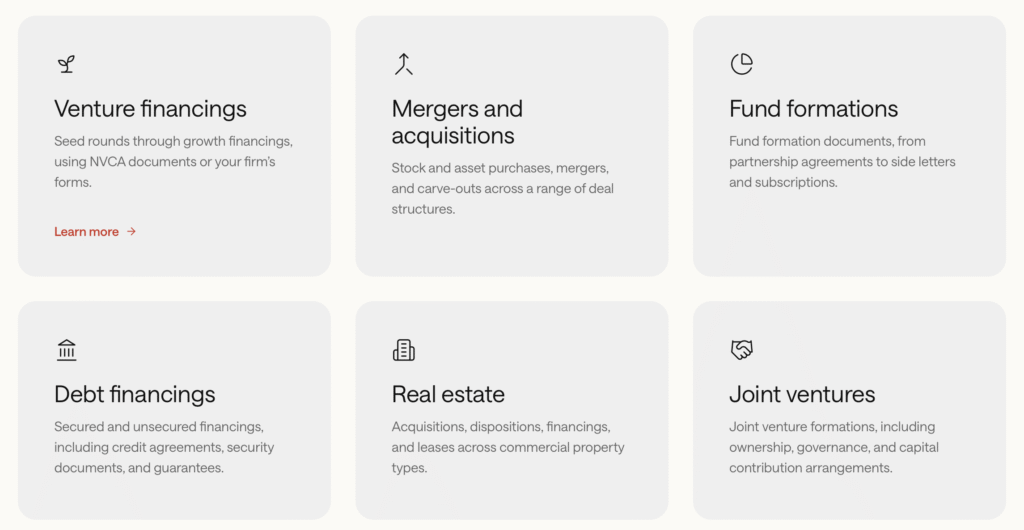
For example, Elego Law, an early access partner, uses Walton’s transaction systems across its venture financing practice.
‘Our clients move fast, and they need lawyers who can keep up. Walton streamlines transaction execution so we can spend more time helping our clients navigate important decisions,’ said Zoë Egelman, Founding Partner of Elego Law – who previously worked at Cooley and Cravath.
So, for those firms that want to execute the more routine work as quickly as possible and focus on the advisory input, this should be really useful. The clients will no doubt appreciate its benefits as well.
More about Walton here.
—
Discover more from Artificial Lawyer
Subscribe to get the latest posts sent to your email.