
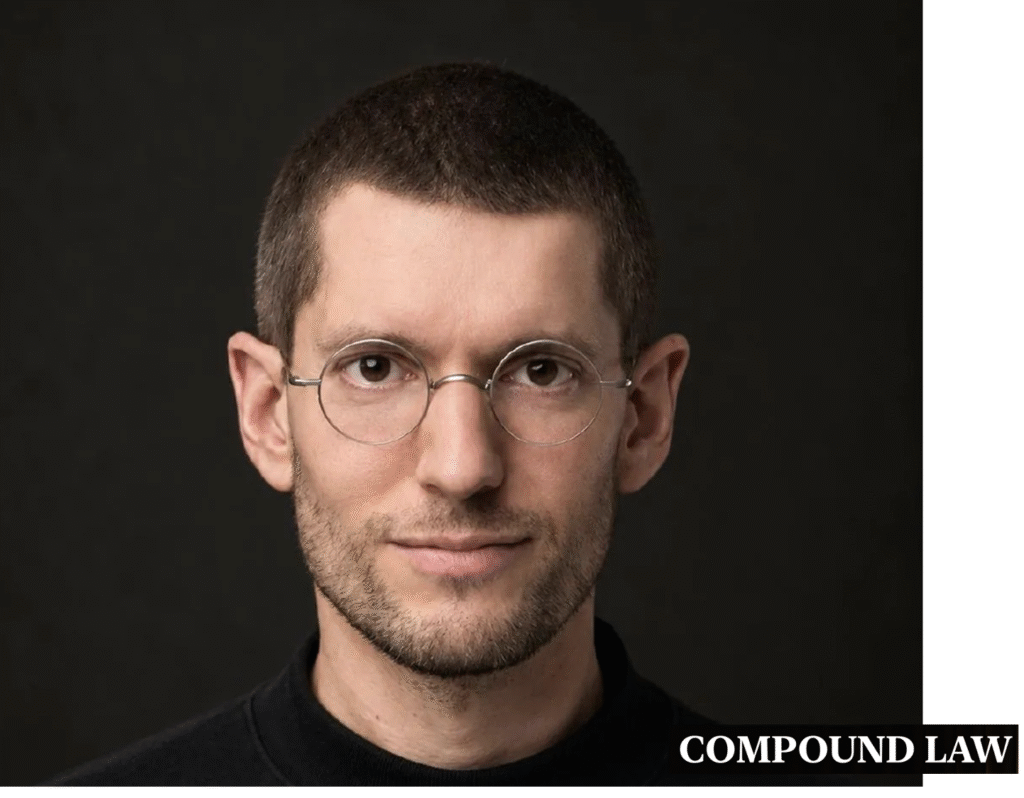
Compound Law, an AI‐native firm based in Berlin, and co-founded by the former General Counsel of Zenjob, has hired Marc Schuba, a White & Case alumnus who most recently served as a Legal Counsel at Mercedes‐Benz – in another sign of the changing tides within our industry, (see AL interview below.)
Philipp Brandt, a business lawyer with more than 20 years of experience, also joins as a partner.
The moves, especially of a former senior inhouse lawyer at a major corporation to a ‘new model’ law firm, are noteworthy because here we are again: experienced lawyers who have many choices for what to do in their careers, joining – or starting – law firms that eschew the billable hour and place AI at the heart of the business.
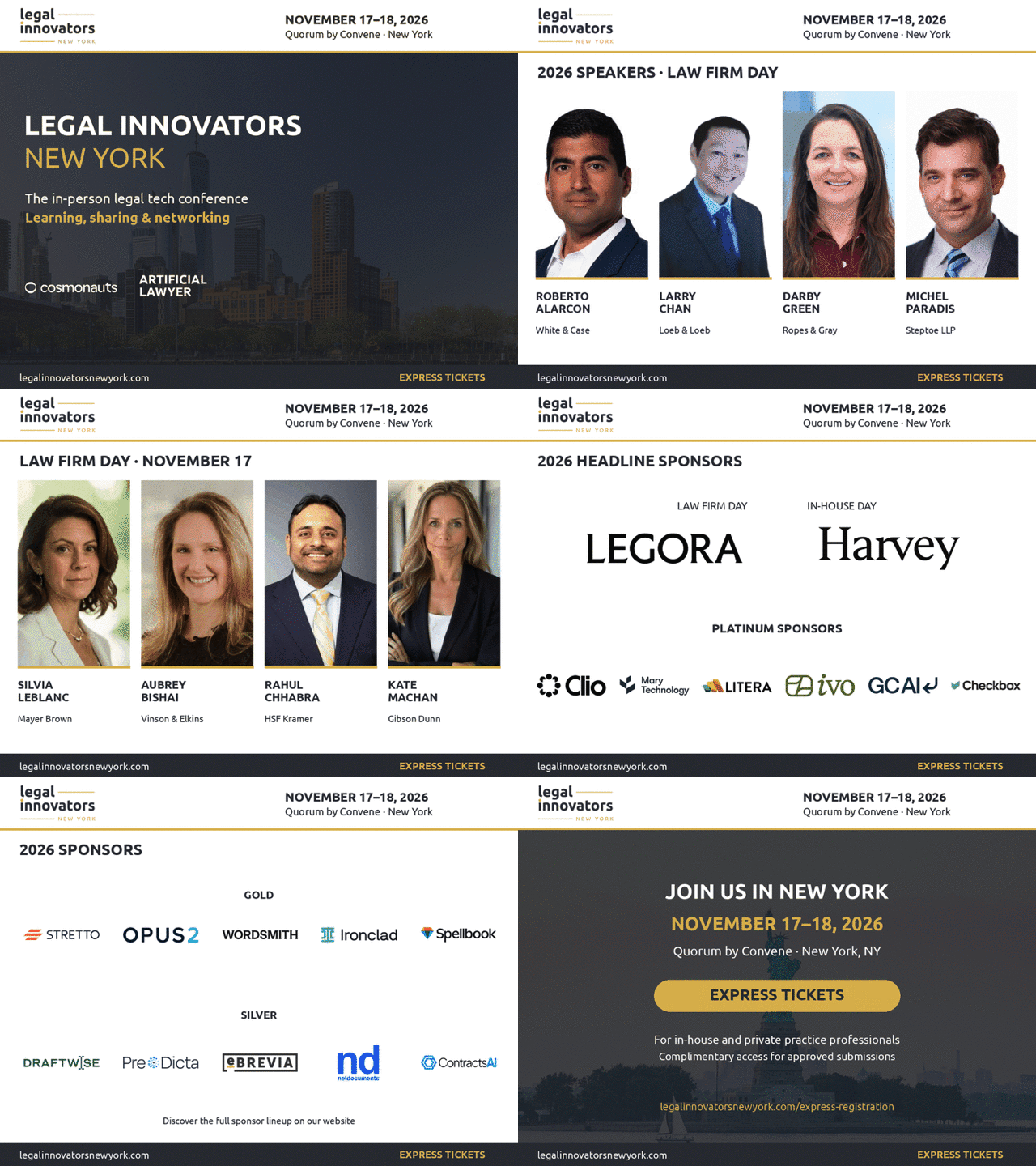
— Legal Innovators New York Conference – Nov 17 + 18 is next week! —
Or rather, they are running a legal business where AI can be of maximum help to them and their clients, rather than operating in a time-based way that reduces the benefits of AI.
And it really says something about where we are now, when so many experienced lawyers must leave traditional firms just to get the most out of AI within their working lives.
Of course, that could change overnight if most firms changed their approach, but that doesn’t seem likely in the short-term. Instead, large commercial law firms are using AI as best as they can – yet, within the bounds of a business approach that is often working against that same technology’s deployment. It’s therefore understandable why so many lawyers are looking for a new direction.
Plus, as AL is seeing increasingly now, the complexity level of work that NewMods are doing is getting higher. For example, the two new additions to Compound Law will cover IT and AI law, data protection and intellectual property.
As explored before, many NewMods focus on startups and foundational commercial contracts, or on bulk contract review needs for larger businesses – but, clearly not all of them. More AI natives are focusing on higher value matters – proving that a ‘NewMod’ approach is adaptable to the complex end of the legal work spectrum. More will arrive for sure – each learning from the others.
The firm noted that they have built their own tech platform, Compound OS, where AI agents prepare research, do analysis, and make drafts, and then a lawyer ‘reviews every result and is accountable’ for the final output to the client. Work is billed at fixed prices agreed up front, instead of hourly rates, they added.
AL asked the firm and Schuba some additional questions:
How is the firm structured?
Compound Law consists of two companies: a regulated law firm that advises clients and is responsible for the legal work, and a tech company that builds Compound OS, the AI platform the firm runs on.
Where are you operating?
Our focus is Germany and the EU. Germany alone is a large market: its top 100 law firms billed more than €10bn last year. As we grow, we plan to extend into further markets.
And Marc, what is your view of the traditional law firm model now?
The traditional law firm model is out of date because it sells the same judgment over and over, by the hour. Yet lawyers have always been programmers; we simply wrote our code in Word.
Good legal judgment can be captured, refined and applied at scale. At Compound Law we codify it once, let our agents apply it, and sharpen it with every matter. That is what allows us to offer competitive, fixed prices.
–

Julian Jantze, Chief Legal Officer at Compound Law and as noted, the former GC at Zenjob, also commented: ‘Marc Schuba has been writing his own software for legal work for years, and Philipp Brandt has built his own online tools for clients. They know what AI can do and where a lawyer’s judgment is needed.
‘For our clients, this means that questions on software contracts, the EU AI Act, trademarks or an impending crisis go straight to a partner with many years of experience in the field.’
More about Compound Law here.
—
Legal Innovators New York Conference – Nov 17 + 18 is next week!
The two-day legal innovation conference, in association with global law firm White & Case, and held at the very cool Quorum venue by Convene in Midtown, New York, will have Day One focused on law firms, and Day Two all about the inhouse world.
We’ll be exploring how legal AI is changing our sector, where we have got to, what we have learned so far, and how to handle what comes next – and hearing from those who are right at the cutting edge of this evolution.
It’s going to be both highly useful to everyone who attends, with plenty of takeaways that can be applied to your law firm or legal team – and a lot of fun, with lots of opportunities to network and also see all the latest new product developments from the world’s leading legal tech companies.
Join us this November for a legal innovation conference that will make a difference!
Here’s the Express Registration link for your free ticket if you work at a law firm or within an inhouse legal team.
Legal Innovators New York Conference – Nov 17 + 18
Discover more from Artificial Lawyer
Subscribe to get the latest posts sent to your email.